Top 6 Forms UI Components in 2026Here are six of the top form components leading the way this year. 1. jqxForm (from jqWidgets) – AI-Powered Smart PasteOne of the most exciting developments in form technology this year comes from jqxForm, part of the jqWidgets UI suite. What makes it stand out in 2026 is its Smart Paste with AI capability. Instead of manually copying and pasting information field by field, users can paste a full block of text — like a contact signature or a formatted address — and the form intelligently parses and distributes the data into the correct inputs. It’s a small feature with a massive usability impact. Beyond Smart Paste, jqxForm offers:
For enterprise systems, CRMs, HR tools, and admin dashboards, this kind of intelligent input handling saves time and reduces user frustration. 2. Webix Form – Flexible and Enterprise-ReadyWebix offers a robust Form UI widget designed for building customizable and validated forms in JavaScript applications. It acts as a container for all common input types (text, textarea, select boxes, checkboxes, radios) and supports integration with frameworks like React, Angular, and Vue. Forms can also include advanced features such as grouped sections and multi-view layouts for complex use cases. Webix uses a clean JSON-based configuration approach that makes forms easy to define and maintain. It supports a wide range of input controls, responsive layouts, and advanced validation rules. 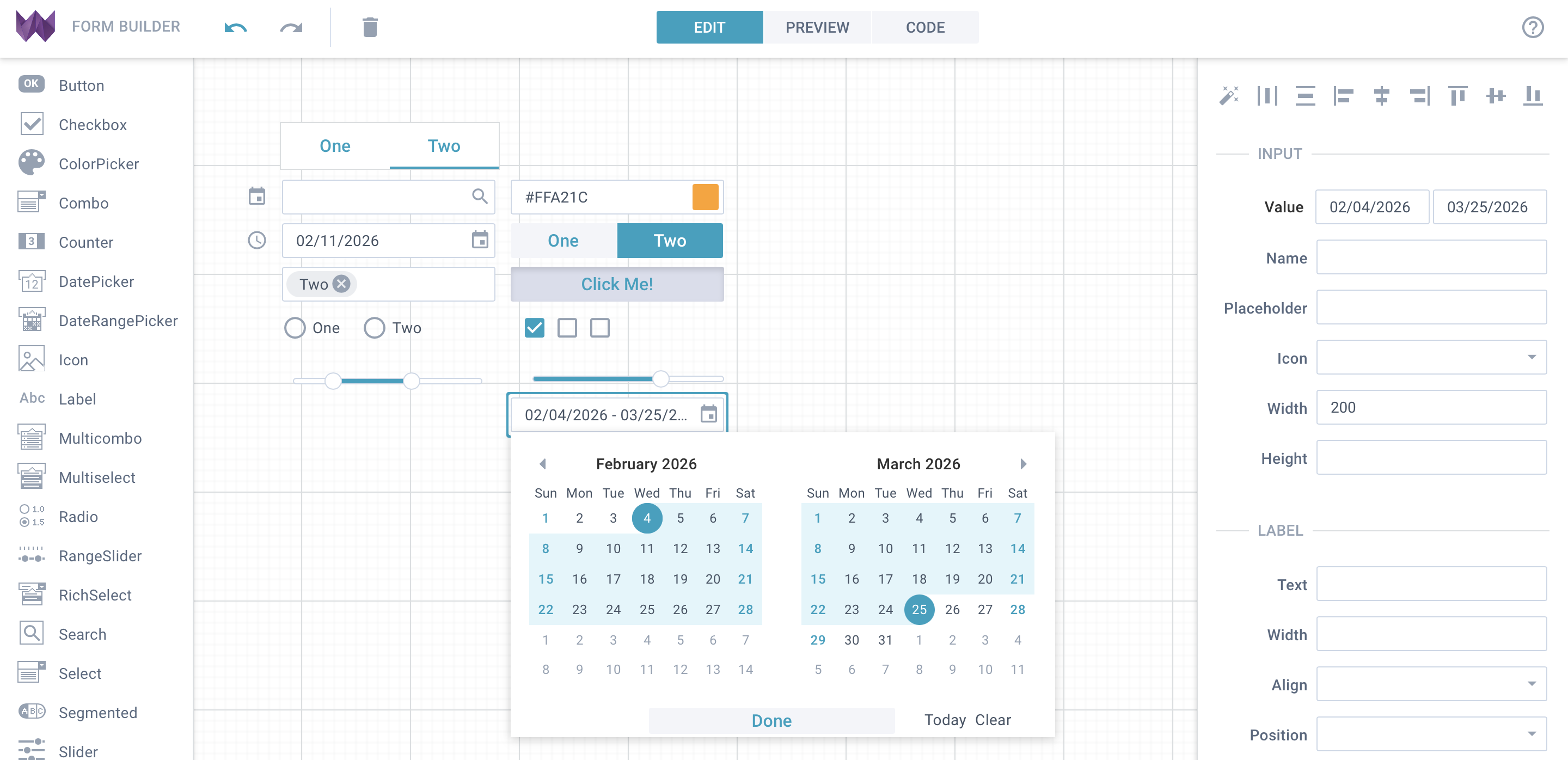
Because it’s part of the broader Webix framework, it integrates smoothly with data grids, dashboards, and workflow components — making it ideal for data-driven enterprise apps. 
3. Smart.Form – Modern Web Component Approach
Smart.Form represents the shift toward modern, reusable Web Component-based UI systems. It focuses on adaptability and clean architecture. Developers can declaratively define form structures while benefiting from modern styling, responsive layouts, and framework-agnostic implementation. For teams building scalable front-end systems that prioritize modularity and reusability, Smart.Form offers a future-ready approach. 4. React Hook Form – Performance FirstIn the React ecosystem, React Hook Form continues to dominate thanks to its lightweight footprint and performance-focused design. It minimizes re-renders, integrates smoothly with schema validation libraries like Zod and Yup, and works beautifully with TypeScript. For developers building fast, responsive React applications, it’s often the go-to solution. 5. Formik – Structured and ReliableFormik remains relevant in 2026, particularly in large React applications that need predictable state management. While it may not be as lightweight as newer alternatives, its clear mental model and mature ecosystem make it a dependable choice for complex, multi-step forms. 6. Angular Reactive Forms – Enterprise StandardFor Angular applications, Reactive Forms are still the gold standard. With observable-based data flow and explicit state control, they offer powerful validation and scalability. Large enterprise Angular projects continue to rely on Reactive Forms for maintainable and testable form architectures. Form Trends in 2026Across all major platforms, several trends define form development this year:
Final ThoughtsChoosing the right form component in 2026 depends on your stack and your priorities.
Forms are no longer just about collecting data — they’re about assisting users, improving speed, and building smarter experiences.
This entry was posted in Uncategorized and tagged ai forms, best forms in 2026, dynamic form, form ui component, forms, forms component, reactive form, smart form, smart paste, smart ui form, top forms. Bookmark the permalink.
|
|